
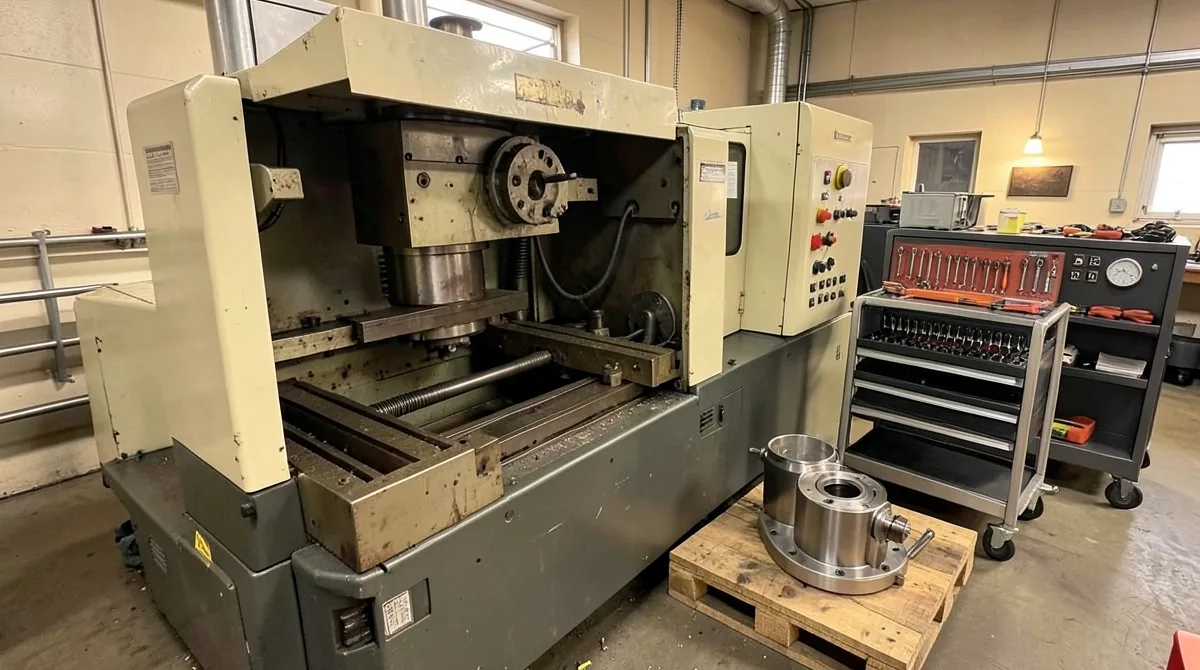
A machining center is holding tolerance, but the control throws intermittent faults and two boards are no longer made. Down the aisle, a knee mill cuts fine except the table drifts. Somebody has to decide what happens next, and the decision rarely comes with good information attached.
The rebuild or replace CNC machine question is really three questions, not two. Mechanical rebuild, control retrofit, and replacement each solve a different failure. Picking the wrong one spends money on a problem that was never the problem.
Start by naming what actually failed
Machines fail in two layers. The iron layer covers spindles, bearings, ball screws, ways, and gibs. Electronics make up the other layer: the control, drives, servo and spindle motors, power supplies, and feedback devices.
Those layers age at different rates. A cast-iron base from 1998 can still be flat and stable. The control bolted to it may have been out of support for a decade. Reverse it and you find a current control mounted to a machine with worn ball screws and scored ways.
Naming the layer first turns a vague budget conversation into a specific one.
Path one: mechanical rebuild
A rebuild addresses the iron. Spindle work covers bearings, seals, and precision grinding. Ball screw repair or replacement addresses backlash and positioning error. Way surfaces, gibs, and alignment get brought back toward spec. Laser alignment and ballbar testing are used to check the result.
Exact’s own repair page says the company rebuilds spindles to original specifications or better. That states the rebuild standard, not a prediction about any particular machine. The distinction matters when you are budgeting.
A rebuild fits when the control still does what you need and the machine’s accuracy has drifted. It does nothing for obsolete electronics.
Path two: control retrofit
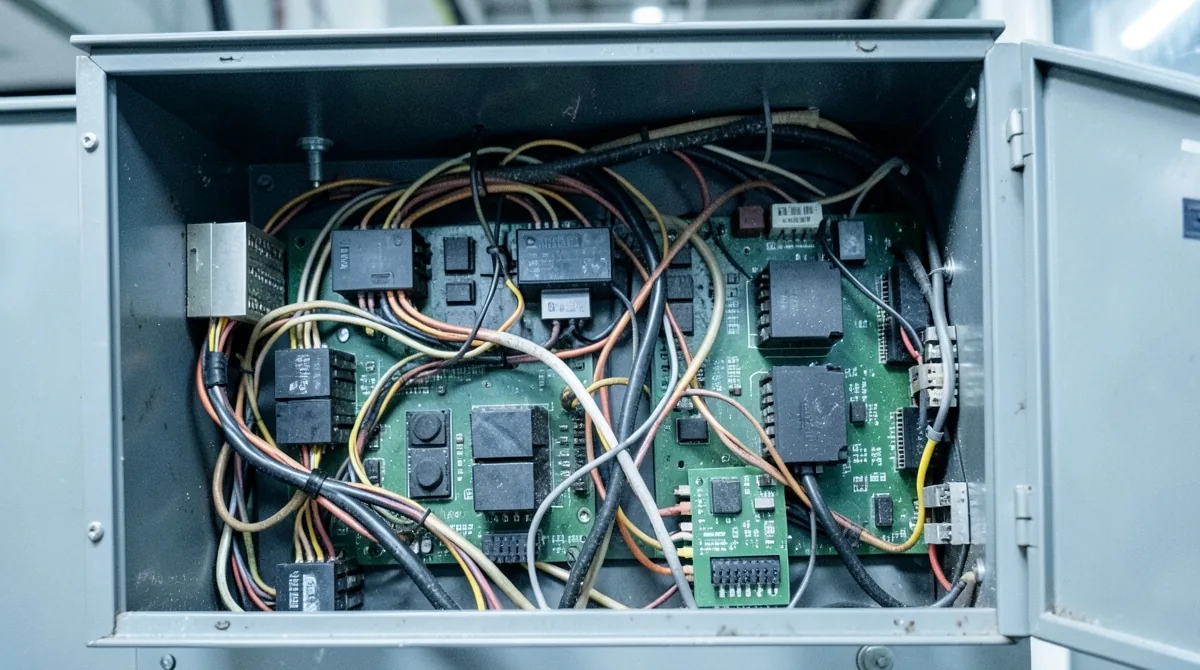
A retrofit replaces the electronic layer and keeps the iron. New control, new drives, new feedback, often new motors, mounted to the same castings.
Retrofits fit a specific profile: solid mechanicals and a control nobody stocks parts for. Add a need for network connectivity or modern probing routines and the case gets stronger. Shops with legacy controls on mechanically sound machines usually land here.
The tradeoff is integration time. A retrofit typically puts a machine down longer than a spindle job. Expect the machine to come back with a different operator interface.
Path three: replacement
Replacement fits when both layers are tired. It also fits when a new print demands more than repair can deliver. Sometimes the deciding factor is simpler. The machine is the only one of its kind, and nobody left knows how to run it.
Replacement splits again into new and used. New brings current technology and a known configuration. Used often moves faster. It also shifts the burden onto inspection. The condition of a specific machine is answered by examination, not by a listing.
What changed in the money math
Tax treatment used to tilt the answer. The IRS position is that a capital expenditure generally cannot be deducted in one year and must be depreciated across a schedule. That rule made a large machine purchase look expensive on the return next to a repair invoice of similar size.
Both sides of that gap narrowed. The IRS states that qualified property acquired and placed in service after January 19, 2025 carries a special depreciation allowance of 100 percent. That allowance is taken after any allowable Section 179 deduction. A qualifying machine purchase can be written off in the year it goes into service. Used equipment can qualify under the same rules. The buyer must not have used that machine before acquiring it, and the acquisition requirements still apply.
None of this is tax advice, and the answer turns on acquisition dates, business income, and entity structure. Take the numbers to your accountant before they move a decision.
Build the comparison on evidence, not memory
Four measurements make the choice defensible:
- Current geometric accuracy, from a ballbar run and a laser alignment check
- Spindle condition, including bearing noise, runout, and thermal behavior
- Control support status, specifically which boards and drives are still available
- Downtime history for the last 24 months, in hours and in scrapped parts
Pennsylvania shops have a resource worth knowing about. NIST’s Manufacturing Extension Partnership helps small and medium-sized manufacturers adopt advanced manufacturing technologies. Its July 2026 funding notice put Pennsylvania at up to $6.1 million in first-year funding, second only to California.
The capacity picture shapes this decision too. Order data shows shops buying fewer machines even as spending sets records. We cover that in our piece on record machine tool orders in 2026. The other pressure is who performs the work. We take that up in our look at the machine tool technician shortage.
Where Exact Machine Service Fits in That Decision
Exact Machine Service is a York, Pennsylvania company that sells machine tools, repairs them in the field, supplies replacement parts, and helps shops fill hard-to-find technician roles. Both halves of the rebuild-or-replace question run through the same company.
Two places to start:
- On-Site Machine Tool Repair — Spindle rebuilds, ball screw repair and replacement, CNC troubleshooting, and control retrofits, with machine assessment performed at your facility
- Used Machine Tools — A changing inventory of used conventional and CNC machine tools across lathes, mills, knee mills, grinders, and saws
Not sure which layer failed? Tell us what the machine is doing — the make, the control, and the symptom.
Works Cited
- United States, Internal Revenue Service. “Topic No. 704, Depreciation.” IRS, 18 Feb. 2026.
- United States, Internal Revenue Service. “Additional First Year Depreciation Deduction (Bonus) — FAQ.” IRS, reviewed 12 May 2026.
- United States, National Institute of Standards and Technology. “NIST Announces Funding Opportunity for 14 MEP Centers to Advance Small and Medium-Sized U.S. Manufacturers.” U.S. Department of Commerce, 22 July 2026.