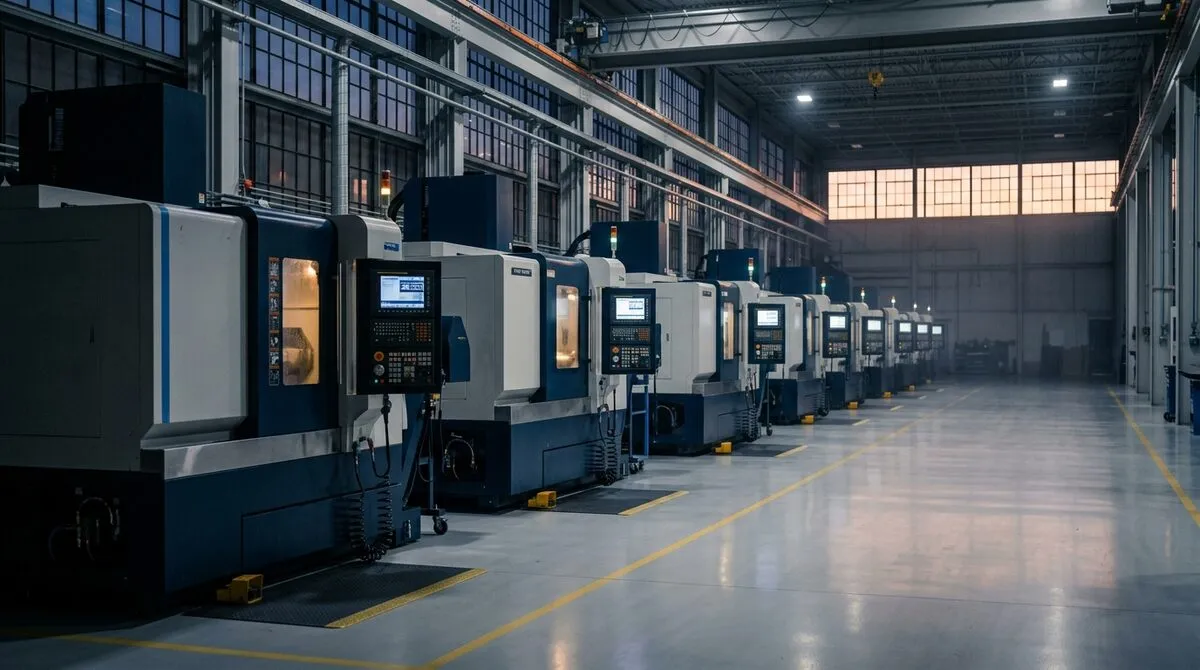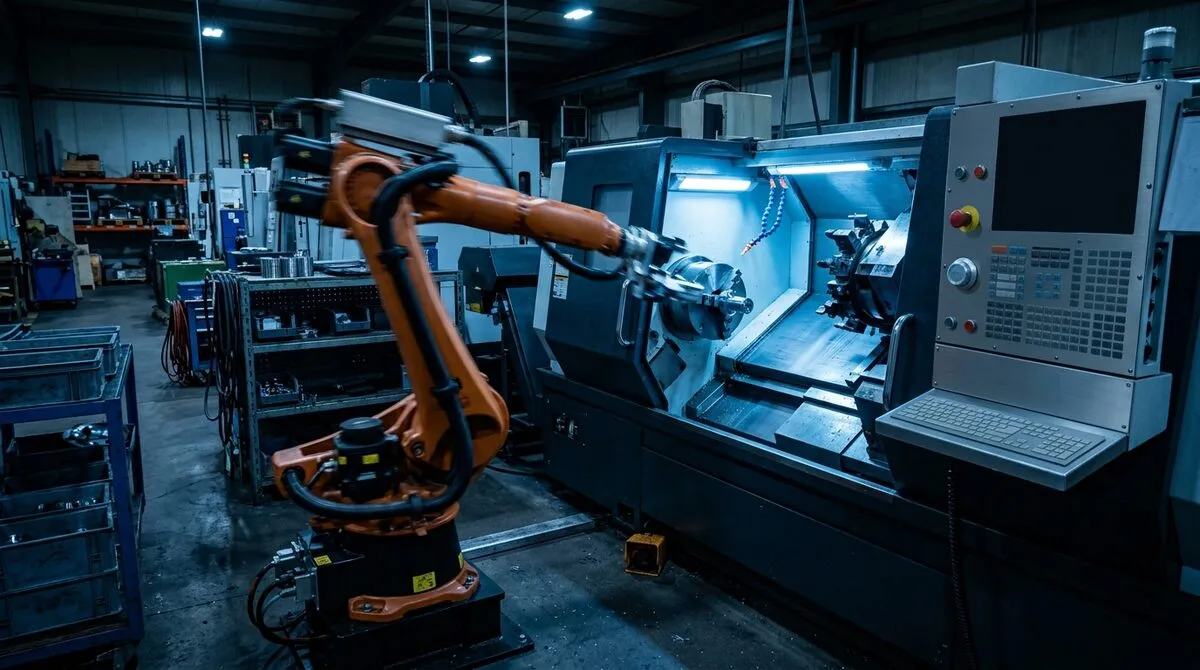

The numbers are no longer surprising — they are alarming. A joint study from Deloitte and The Manufacturing Institute projects the U.S. manufacturing skills gap could leave more than 2.1 million positions unfilled by 2030, with CNC machinists, field service engineers, and automation specialists ranking among the hardest roles to fill. The cost of those empty positions: potentially $1 trillion in lost economic output in a single year. For manufacturers across Pennsylvania, Maryland, New Jersey, Ohio, and West Virginia, this is not a distant forecast. It is today’s production reality, felt on every shift where a machine sits idle because no qualified operator showed up for orientation.
The Data Behind the Crisis
According to the U.S. Bureau of Labor Statistics, machinists and tool and die makers generate roughly 34,200 job openings annually — not because the sector is expanding rapidly, but because the workers who built it are retiring faster than replacements can be trained. The median age of the American machinist is approaching 47. Apprenticeship pipelines that once reliably replenished shop floors have been chronically underfunded for two decades. Community college machining programs have struggled to attract enrollment, and the cultural redirection of young people toward four-year degrees pulled two generations of potential technicians away from the trades entirely.
The depth of skill required for modern CNC roles has simultaneously risen. A shop floor operator in 2026 is expected to interpret CAD/CAM files, set up multi-axis machining centers, troubleshoot servo systems, manage statistical process control documentation, and adapt programs mid-run to compensate for tool wear or material variation. These demand for cnc machinists, which once justified separate specialists, are now compressed into individual job descriptions. That compression narrows the qualified candidate pool dramatically while inflating the damage each vacancy causes.
Regional manufacturers are absorbing the impact across multiple dimensions: extended lead times on custom parts, overtime burnout cascading through the remaining skilled workforce, and a growing inability to accept new contracts due to headcount constraints. Shops are turning away profitable work not because they lack capacity on paper, but because they lack the human expertise to load that capacity with confidence.
Why CNC Field Service Roles Are the Hardest to Fill
While the shortage touches every technical tier, CNC field service engineers sit at the acute end of the CNC Staffing Crisis. These are the professionals who travel to client facilities, diagnose control and mechanical failures, perform laser calibration, repair spindles, and restore production capability — often under urgent pressure with little margin for extended diagnosis time. Their skill set bridges electrical theory, mechanical precision, CNC programming knowledge across multiple control platforms, and the kind of customer-facing communication that keeps a relationship intact when a machine is down and production is bleeding.
No four-week bootcamp produces a qualified CNC field service engineer. The path to competency runs through years of hands-on exposure to machines, controls, drives, and troubleshooting scenarios that cannot be replicated in a classroom. The training investment is long, and the career pipeline that once fed the field has thinned considerably.
The retirement wave is particularly severe in field service. Veterans who spent decades mastering Fanuc, Mitsubishi, and Siemens control systems are leaving, and the institutional knowledge they carry rarely exists in documented form. Manufacturers who depended on those technicians are discovering the gap only when a machine goes down unexpectedly and there is nobody qualified to respond within a reasonable geography. That gap is widening.
For a deeper understanding of the capital equipment environment those technicians are being asked to support, read Record Machine Tool Orders Signal a Capital Equipment Surge — and a Used Market Boom, which puts current machinery investment patterns in sharp context and explains why demand for cnc machinists for skilled technical support is increasing alongside the volume of equipment on shop floors.
The Reshoring Factor
The workforce shortage is colliding with a reshoring boom that is adding new technical positions faster than the market can staff them. Federal incentives tied to semiconductor production, defense manufacturing, and EV supply chain development have triggered a wave of domestic facility construction and retooling across the Mid-Atlantic and Midwest. New machines are landing on new floors — and those machines need skilled people to run, program, and maintain them. The paradox facing many manufacturers is that their capital investment has outrun their human capital.
The Manufacturing Institute’s research highlights that the shortage spans entry-level production roles all the way up to specialized engineering positions. It is not cyclical, tied to a specific economic downturn that will correct itself when conditions improve. It is structural — driven by demographics, educational pipeline failure, decades of cultural messaging that pushed students away from manufacturing careers, and the increasing technical complexity of work that used to be done by workers with narrower skill requirements.
The Deloitte and Manufacturing Institute data also makes clear that the cost of vacancy extends beyond direct production loss. Unfilled technical roles cascade into quality escapes, longer lead times, reduced quoting capability, and customer attrition as delivery commitments become harder to keep. Manufacturers who fail to address the staffing gap do not simply run less efficiently — they risk losing the contract base that justifies their current capacity investment.
What the Best-Positioned Manufacturers Are Doing
Across the region, manufacturers weathering the shortage most effectively share a common characteristic: they treat technical talent as infrastructure rather than a variable cost. That means building relationships with technical staffing specialists before positions become urgent, rather than scrambling when a key operator gives two weeks’ notice. It means creating onboarding environments where vetted, experienced candidates can contribute from day one rather than disappearing through a six-month probationary maze. And it means understanding that the competition for CNC machinists, automation technicians, and field service engineers is national — is a CNC machinist a good career? The answer increasingly shapes workforce strategy, because a regional manufacturer is competing with aerospace primes, defense contractors, and EV manufacturers for the same shrinking pool.
Wage investment is part of the equation, but it is not sufficient on its own. Modern Machine Shop’s analysis of the current CNC workforce underscores that the most effective manufacturers combine competitive compensation with genuine career development pathways, advanced equipment that skilled workers actually want to run, and a commitment to not wasting the capabilities of people they have worked hard to hire.
Internal upskilling is also growing as a strategy. Shops are identifying capable operators and investing in structured training toward multi-axis machining, CNC programming, and maintenance competency — extending the depth of their existing workforce rather than waiting for the external market to deliver the experienced hires they need. This approach takes time, but it compounds: each skilled worker trained internally reduces future exposure to the open market.
The precision maintenance side of operations is equally important. Facilities running uncalibrated or poorly maintained equipment are wasting the productivity of the skilled workers they do have — compounding the staffing problem with an equipment reliability problem that drives defects, scrap, and rework into the hours of people who are already stretched thin. That dynamic is explored in detail in Precision Is a Moving Target — Why CNC Laser Calibration Is No Longer Optional.
A Structural Problem Requiring a Deliberate Response
The manufacturers navigating this environment best are not hoping the labor market corrects itself. They are building deliberate, repeatable systems for finding, placing, and retaining the technical talent their operations depend on — and they are doing it through partners who specialize in exactly that work. The cost of inaction, measured in lost contracts, delayed shipments, quality escapes, and overtime burn, consistently exceeds the cost of investing in the right staffing infrastructure before the CNC staffing crisis forces the decision.
Exact Machine Service
Exact Machine Service connects manufacturers with the skilled technical professionals they need to keep operations running. We deliver vetted, qualified talent ready to perform from day one.
Our Services Include:
- Technical Staffing Solutions — CNC field service engineers, automation specialists, machinists, and skilled trades professionals placed nationwide
- Machine Tool Sales & Service — Used CNC and manual machine tools, field repair, maintenance, and laser calibration across throughout Pennsylvania, Maryland, New Jersey, Ohio, West Virginia and beyond
Ready to Fill Your Open Roles? Contact Exact Machine Service to discuss your staffing needs and get pre-screened technical candidates working in your facility fast.
Works Cited
“Machinists and Tool and Die Makers.” U.S. Bureau of Labor Statistics Occupational Outlook Handbook, U.S. Department of Labor, www.bls.gov/ooh/production/machinists-and-tool-and-die-makers.htm. Accessed 26 Mar. 2026.
“2.1 Million Manufacturing Jobs Could Go Unfilled by 2030.” The Manufacturing Institute, themanufacturinginstitute.org/2-1-million-manufacturing-jobs-could-go-unfilled-by-2030-11330/. Accessed 26 Mar. 2026.